
1737CornariusJ


Content


[i] Annotation

Fragment from the book: Cornarius J. Hippocratis Opera omnia, Vol. I (Гиппократ, Полное собрание сочинений, 1737). This article presents an excerpt from the treatise «Mochlicus» (Instruments of Reductions) by Hippocrates of Cos (b. 460 BC), translated into Latin. The author describes for the first time the localization and area of distal attachment of the ligamentum capitis femoris (LCF). A translation of this article into Russian is available at the link: 1737CornariJ. The original source in Greek sees at the link: 1844LittreE, and in English at: 1886AdamsF.


Quote p. 63

Liber de ossium natura Mochlicus

Ipsum aurem femur foras, & in anteriore parte incurvum est. Caput autem ejus appendix eft rotunda, ex qua nervus, qui in coxae acetabulo est, nascitur. Subobliquus autem etiam hic annexus est, minus vero quam brachium. Coxa vero magno verticulo, quod juxta os sacrum est, ex ligamento cartilagineo ac nervoso adhaeret.oxa vero magno verticulo, quod juxta os sacrum est, ex ligamento cartilagineo ac nervosa adhaeret.


Quote p. 63

Mochlicus' book on the nature of bones

The femur itself is curved outward and forward. Its head is a rounded process from which a tendon extends, located in the acetabulum of the pelvic bone. It attaches here slightly diagonally, but less diagonally than the humerus. The pelvic bone itself is firmly attached around its entire circumference to a large vertebra located on the sacrum, via a cartilaginous and tendinous ligament.


Cornarius J. Hippocratis Opera omnia ex Jani Cornari Version una cum Jo. Marinelli Commentariis ac Petri Matthaei Pini index. Tomus primus. Veneiis: ex Typographia Radiciana, 1737. archive.org


The work is cited in the following publications: 


Janus Cornarius (ca. 1500-1558) was a philologist, translator, physician and professor of medicine.  wikipedia.org

Janus Cornarius
Unknown author, original in the
wikipedia.org collection
(CC0 – Public Domain, no changes)


Hippocrates (Hippocrates of Kos, Ἱπποκράτης ὁ Κῷος, Hippocrates II; 460 – ca. 370 BC) was a Greek physician, philosopher. wikipedia.org
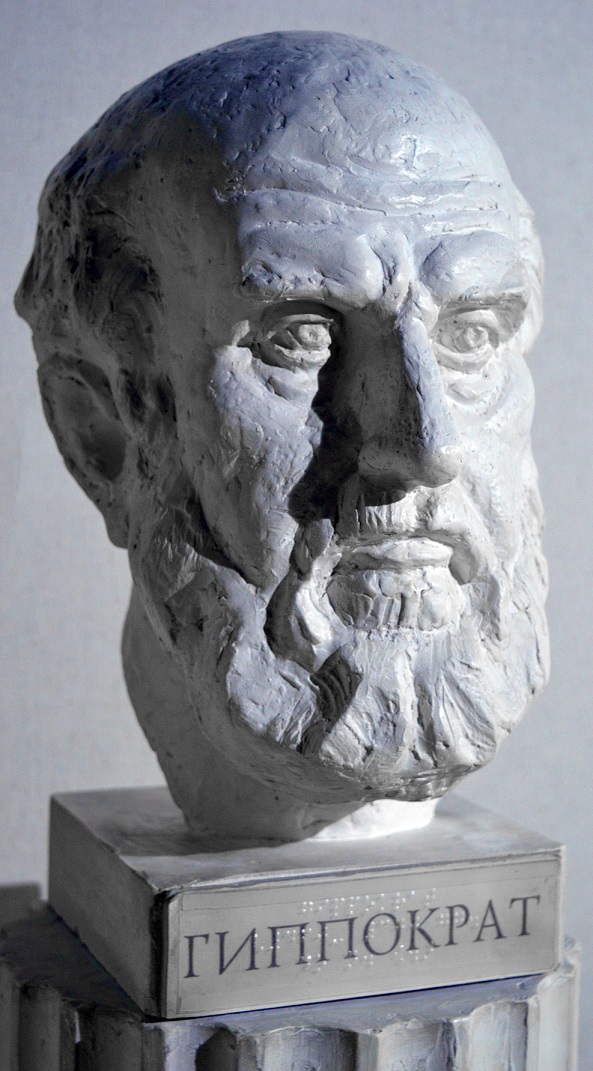
Hippocrates
Bust in the State Darwin Museum, Moscow; photograph by the author.

ligamentum capitis femoris, ligamentum teres, ligament of head of femur, anatomy, synonym, attachment, Hippocrates, Latin 


NB! Fair practice / use: copied for the purposes of criticism, review, comment, research and private study in accordance with Copyright Laws of the US: 17 U.S.C. §107; Copyright Law of the EU: Dir. 2001/29/EC, art.5/3a,d; Copyright Law of the RU: ГК РФ ст.1274/1.1-2,7


Comments

Popular posts from this blog

1886LesshaftP

  According to the author, the ligamentum capitis femoris (LCF) reduces shocks and impacts of the articular surfaces. In addition, P. Lesshaft states an anatomical fact: the LCF is located vertically under the part of the acetabulum, which mainly bears the weight of the body. The text is prepared for machine translation using a service built into the blog from Google or your web browser. In some cases, we have added links to quotations about LCF available on our resource, as well as to publications posted on the Internet.   Über die Vorriehtungen in den Gelenken zur Milderung der mit den Bewegungen verbundenen Stösse und Erschütterungen . Von P. Lesshaft, Professor der Anatomie in St. Petersburg. (Schluß.) Die Bewegungen im Kiefergelenke werden auch von einer hier liegenden Bandscheibe (Meniscus interarticularis) gemindert, aber außerdem von Syndesmosen, die als Gomphosis der Zähne und als Nahtverschmelzung (sutura) hier vorkommen und welche nichts anderes als eine (...

Tiktaalik roseae

  TIKTAALIK ROSEAE The first truly tetrapod animal (Limbed tetrapods) is recognized as the lobe-finned fish Tiktaalik roseae (clade Elpistostegalia), discovered in rocks aged about 375 Ma (2006DaeschlerEB_JenkinsJrFA; 2008ShubinN; 2017ShubinN). Discoveries in recent years have allowed us to place the taxa of early tetrapodomorphs in the following order: Tinirau, Eusthenopteron, Megalichthys, Panderichthys, Qikiqtania, Tiktaalik, Elpistostege, Parmastega, Ventastega, Acanthostega, Elginerpeton, Ymeria, Ichthyostega (2022StewartTA_ShubinNH). The closest ancestor of Tiktaalik roseae, the fragments of the skeleton of which are relatively well preserved, is Panderichthys. Reconstruction of the prehistoric fish Pandericthys Author Tyler Rhodes; original in the  wikipedia.org   collection (license CC BY-SA 3.0, no changes). The shape of the skeleton of the pectoral fin and shoulder girdle suggests that Panderichthys rhombolepis "walked" (2006AhlbergPE_ClackJA). At the very least...

163-192Galen

Fragment from the treatise Galen. On anatomical procedures (Περὶ Ἀνατομικῶν Ἐγχειρήσεων, ca. 163-192). The author writes about the high resiliency and hardness of ligamentum capitis femoris (LCF), and also notes its connective function. See our commentary at the link: 163-192Galen [Rus], and  2020ArkhipovSV_ProlyginaIV . Quote [Grc] Περὶ Ἀνατομικῶν Ἐγχειρήσεων. Βιβλιον B. K εφ . ι ʹ . Αλλά χρή σε, καθάπερ επί της χειρός επεσκέψω τους συνδέσμους των οστών, ούτω και νυν επισκέψασθαι πασών των γεγυμνωμένων διαρθρώσεων, πρώτης μεν της κατ' ισχίον, εχούσης ένα μεν εν κύκλω σύνδεσμον, απάντων των άρθρων κοινόν, (ουδέν γάρ έστιν, ότω μή περιβέβληται τοιούτος σύνδεσμος,) έτερον δε τον διά του βάθους εν τη διαρθρώσει κατακεκρυμμένον, ος συνάπτει την κεφαλήν του μηρού τη κατ' ισχίον κοιλότητι, πάνυ σκληρός ών, ώς ήδη δύνασθαι λέγεσθαι νεύρον χονδρώδες. (original source: 1821KühnCG, pp. 328-329) [Lat] De Anatomicis Administrationibus. Liber II. Cap. X. Verum considerare te convenit, ut i...

1877MorrisH

An excerpt from the article by Morris H. Dislocations of the Thigh: their mode of occurrence as indicated by experiments, and the Anatomy of the Hip-joint (1877, pp. 161-170). The author noted that the ligamentum capitis femoris (LCF) is stretched during flexion, adduction, and external rotation. It was found that the LCF is always damaged in hip dislocations, is more often torn from the femur, and is rarely ruptured. Discussion of article see article 1877BrookeC .   DISLOCATIONS OF THE THIGH: THEIR MODE OF OCCURRENCE AS INDICATED BY EXPERIMENTS AND THE ANATOMY OF THE HIP-JOINT. BY HENRY MORRIS, M.A., M.B., F.R.C.S., ASSISTANT SURGEON TO, AND LECTURER ON ANATOY1 AT, THE MIDDLESEX HOSPITAL. Received January 9th-Read February 13th, 1877. RECENTLY, whilst making various dissections of the hip-joint, the usually accepted doctrine that dorsal and ischiatic dislocations of the femur occur when the thigh is in a position of adduction appeared to me as very improbable, on anatomi...

1857HyrtlJ

The author discusses the anatomy, structure, and role of the ligamentum capitis femoris (LCF). Based on his own research, Josef Hyrtl asserts that the vessels of the LCF do not participate in supplying blood to the femoral head. The author highlights the high strength of the LCF and changes in congenital dislocations. Apparently, this work was the first to suggest that the LCF serves as a conductor of inflammatory processes and a cause of coxalgia. Hyrtl J. Handbuch der topagraphischen Anatomie und ihrer praktisch medicinisch-chirurgischen Anwendungen. Zweiter band. Wien: W. Braumüller, 1857. [fragment] Quote p. 410-412 c. Rundes Band des Schenkelkopfes. Einfluss desselben auf die Stellung des Beins bei Coxalgie. Ein verticaler, durch die Mitte der Pfanne und des Schenkelkopfes und bei richtiger Beckenneigung von aussen nach innen geführter Schnitt, trennt das runde Band in zwei gleiche Schenkel, einen vorderen und hinteren. Das Band ...

1851HyrtlJ

  The author expresses a classic view on the functions of the ligamentum capitis femoris (LCF): a conductor of blood vessels and a limiter of adduction of the femur. J. Hyrtl believed that it was impossible to completely dislocate the hip without tearing the LCF. Hyrtl J. Lehrbuch der Anatomie des Menschen, mit Rücksicht auf physiologische Begründung und praktische Anwendung. Wien: W. Braumüller, 1851. [fragment] Quote p. 265 In der Höhle des Gelenks liegt das runde Band des Schenkelkopfes (Lig. teres), welches an der Incisura acetabuli entspringt, und bei richtiger Neigung des Beckens, senkrecht zur Grube des Schenkelkopfes aufsteigt. Es beschränkt dieses Band die Zuziehung des Schenkels, und schreibt zugleich den durch die Incisura acetabuli eindringenden Blutgefässen den Weg vor, den sie zum Oberschenkelkopfe zu nehmen haben. Da das Band, wenn es in die Höhle des Gelenkes vorragen würde, durch Reibung viel zu leiden hätte, so...

14c.Rudolf_von_Ems

  Rudolf von Ems. Weltchronik, m iniature Jacob Wrestling with an Angel ( 14th cent., between 1350 and 1375).  Depicting the circumstances and mechanism of the ligamentum capitis femoris (LCF) injury based on the description in the Book of Genesis: 25 And Ja cob was left alone; and there wrestled a man with him until the breaking of the day.  26 And when he saw that he could not pre vail against him, he struck against the hollow of his thigh ; and the hollow of Jacob's thigh was put out of joint, as he was wrestling with him. … 33 Therefore do the children of Israel not eat the sinew which shrank, which is upon the hollow of the thigh, unto this day; because he struck against the hollow of Jacob's thigh on the sinew that shrank.  ( 1922LeeserI , Genesis (Bereshit) 32:25-26,33) More about the plot in our work:  Ninth month, eleventh day  ( 2024АрхиповСВ. Девятый месяц, одиннадцатый день ). Unknown author ,  m iniature  Jacob Wrestling with an Ang...

LCF in 2026 (August)

    LCF in 2026 (August )  (Quotes from articles and books published in  August   2026 mentioning the ligamentum capitis femoris)   Maldonado, D. R., Schab, A. R., & Domb, B. G. (2026). Improvement in Patient‐Reported Outcomes, High Rate of Return to Sport, and Secondary Surgery Rate Ranging From 0% to 9.8% After Hip Arthroscopy in Dancers and Athletes in Flexibility Sports: A Systematic Review. Arthroscopy, Sports Medicine, and Rehabilitation , e70020.    [i]    arthroscopyjournals.onlinelibrary.wiley.com   Klingele, K., & Strub, D. (2026). Author Response: Considerations and Challenges in Open Reduction With Ligamentum Teres Reconstruction for Pediatric Developmental Dysplasia of the Hip. Journal of Pediatric Orthopaedics .    [ii]    ovid.com   Quesada‐Jimenez, R., Rana, K., Strok, M. J., Kahana‐Rojkind, A. H., Burt, A. K., Sugarman, E. P., & Domb, B. G. (2026). Dual Labral and Ligamentum Ter...

LCF in 2026 (May)

LCF in 2026 (May )  (Quotes from articles and books published in May   2026 mentioning the ligamentum capitis femoris)   Kim, P. S., Kang, C., Lee, J. K., & Hwang, J. M. (2026). Hip arthroscopy to treat symptomatic paralabral cysts: a retrospective analysis of clinical outcomes. Arthroscopy and Orthopedic Sports Medicine , 13 (1), 27-34.     [i]     e-aosm.org   Ko, H. Y. (2026). Vascular Anatomy of the Extremities and Lungs. In Practical Functional Anatomy for Spinal Cord Injury Rehabilitation: A Guide for Physiatrists and Rehabilitation Specialists (pp. 191-223). Singapore: Springer Nature Singapore.      [ii] link.springer.com   Aiba, H., Yamaguchi, M., Kimura, H., & Murakami, H. (2026). Advances in limb-salvage surgery and reconstruction for pediatric bone and soft tissue tumors. Frontiers in Pediatrics , 14 , 1817788.      [iii]     pmc.ncbi.nlm.nih.gov   Bajwa, A., Villar, R., ...

2025SarassaC_HerreraAM

  Content [i]   Annotation [ii]   Original text [iii]   References [iv]   Source  &  links [v]   Notes [vi]   Authors & Affiliations [vii]   Keywords [i]   Annotation Abstract of the article : Sarassa C. et al . I ntraosseous Tunneling and Ligamentum Teres Ligamentodesis “Teretization” to Enhance S tability in Congenital Hip Dislocation Surgery: Surgical Technique and Mid-Term Outcomes (2025). The article describes a technique for fixing the femoral head using the ligamentum capitis femoris (LCF) in congenital hip dislocation. The text in Russian is available at the following link: 2025SarassaC_HerreraAM . [ii]   Original text Abstract Background Developmental dysplasia of the hip (DDH) with complete dislocation (grade ≥III) in older patients often requires open reduction. However, achieving long-term stability remains challenging. This study introduces and evaluates a novel surgical technique, intraosseous tunneling ...