
Posts

Showing posts with the label Hippocrates

1665LindenJA


Content


[i] Annotation

Fragment from the book: Linden JA. Magni Hippocratis Coi Opera Omnia Graece Et Latine Edita. Vol. I. (1665). This article presents an excerpt from the treatise «Mochlicus» (Instruments of Reductions) by Hippocrates of Cos  (b. 460 BC), translated into Latin. The author describes for the first time the localization and area of distal attachment of the ligamentum capitis femoris (LCF) describit, mentionem in alio tractatu ponens. A translation of this article into Russian is available at the link: 1665LindenJAThe original source in Greek sees at the link: 1844LittreE, and in English at: 1886AdamsF.


Quote pp. 294-295

Vol. I. Ossium natura

II. Ipsum aurem femur foras, & in anteriore parte incurvum est. Caput autem ejus appendix eft rotunda, ex qua nervus, qui in coxae acetabulo est, nascitur. Subobliquus autem etiam hic annexus est, minus vero quam brachium. Coxa vero magno verticulo, quod juxta os sacrum est, ex ligamento cartilagineo ac nervosa adhaeret.


Quote pp. 294-295

Vol. 1. The Nature of Bones

2. The femur itself is curved outward and forward. Its head is a rounded process from which a tendon extends, located in the acetabulum of the pelvic bone. It attaches here slightly diagonally, but less diagonally than the humerus. The pelvic bone itself is firmly attached around its entire circumference to a large vertebra located on the sacrum, via a cartilaginous and tendinous ligament.


Van der Linden JA. Magni Hippocratis Coi Opera Omnia Graece Et Latine Edita. Vol. I. Lugduni Batavorum: Apud Danielem, Abrahamum & Adrianum a Gaasbeeck, 1665.   archive.org

Van der Linden JA. Magni Hippocratis Coi Opera Omnia Graece Et Latine Edita. Vol. II. Lugduni Batavorum: Apud Danielem, Abrahamum & Adrianum a Gaasbeeck, 1665.   archive.org


The work is cited in the following publications: 


Johannes Antonides van der Linden (Jan Antonides van der Linden, 1609–1664) was a Dutch physician, botanist. wikipedia.org


Johannes Antonides van der Linden (1660) 
Author: Abraham Lambertsz. van den Tempel; original in the wikipedia.org collection (CC0 – Public Domain, color correction).


Hippocrates (Hippocrates of Kos, Ἱπποκράτης ὁ Κῷος, Hippocrates II; 460 – ca. 370 BC) was a Greek physician, philosopher. wikipedia.org
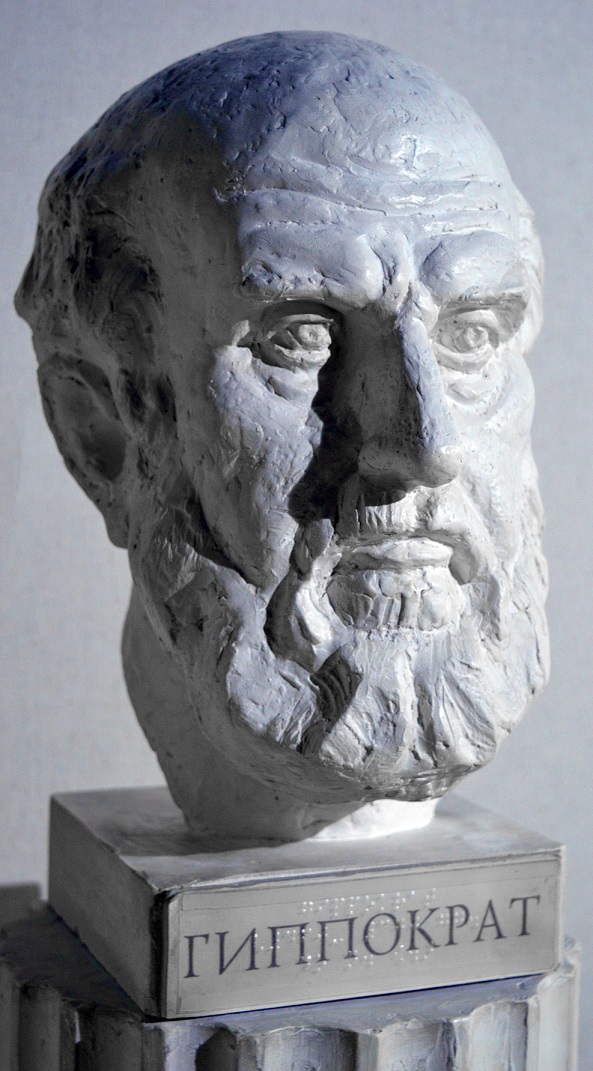
Hippocrates
Bust in the State Darwin Museum, Moscow; photograph by the author.

ligamentum capitis femoris, ligamentum teres, ligament of head of femur, anatomy, synonym, attachment, Hippocrates, Latin 


NB! Fair practice / use: copied for the purposes of criticism, review, comment, research and private study in accordance with Copyright Laws of the US: 17 U.S.C. §107; Copyright Law of the EU: Dir. 2001/29/EC, art.5/3a,d; Copyright Law of the RU: ГК РФ ст.1274/1.1-2,7


1737CornariusJ

Content [i] Annotation [ii] Original text (in Latin) [iii] English translation [iv] Source & links [v] Notes [vi] Authors & Affiliations [vii] Keywords [i] Annotation Fragment from the book: Cornarius J. Hippocratis Opera omnia, Vol. I (Гиппократ, Полное собрание сочинений, 1737). This article presents an excerpt from the treatise «Mochlicus» (Instruments of Reductions) by Hippocrates of Cos (b. 460 BC), translated into Latin. The author describes for the first time the localization and area of distal attachment of the ligamentum capitis femoris (LCF). A translation of this article into Russian is available at the link: 1737 CornariJ . The original source in Greek sees at the link: 1844LittreE , and in English at: 1886AdamsF . [ii] Original text (in Latin) Quote p. 63 Liber de ossium natura Mochlicus Ipsum aurem femur foras, & in anteriore parte incurvum est. Caput autem ejus appendix eft rotunda, ex qua nervus, qui in coxae acetabulo est, nascitur. Subobliq...

480-413bcHippocrates

  Fragment from the treatise Hippocrates On the Instruments of Reduction ( Μοχλικός , ca. 480-413 BC, our opinion). The author reports the presence of ligamentum capitis femoris (LCF) in the acetabulum and indicates its distal attachment site. See our commentary at the link: 480-413bcHippocrates [Rus]. Quote [Grc] Μοχλικός . 1. ἄλλην δὲ ἄνωθεν ἔχουσιν ἐπίφυσιν , ἐν ᾗ τὸ τοῦ μηροῦ ἄρθρον κινέεται , ἁπλόον καὶ εὐσταλὲς ὡς ἐπὶ μήκει · εἶδος κονδυλῶδες , ἔχον ἐπιμυλίδα · αὐτὸς δ᾿ ἔγκυρτος ἔξω καὶ ἔμπροσθεν · ἡ δὲ κεφαλὴ ἐπίφυσίς ἐστι στρογγύλη , ἐξ ἧς τὸ νεῦρον τὸ ἐν τῇ κοτύλῃ τοῦ ἰσχίου πέφυκεν ὑποπλάγιον δὲ καὶ τοῦτο προσήρτηται , ἧσσον δὲ βραχίονος . (original source: 1844LittreE , p. 340) Translation [Eng] Mochlicus . 1. ... the femur itself bends outwards and forwards; its head is a round epiphysis which gives origin to the ligament inserted in the acetabulum of the hip-joint [translator's note: Allusion is evidently made to the ligamentum teres]. This bone is articulated some...

1564CornariusJ

  Fragment from the book Cornarius J. Hippocratis с oi medicorum omnium facile principis, opera quae extant omnia (1564). The author translates into Latin the treatise of Hippocrates Instruments of Redactions , which indicates the localization of ligamentum capitis femoris (LCF), using the outdated synonym «neruus» (see 1844LittréE and our work 2020ArkhipovSV_ProlyginaIV ). Quote p. 72. [Lat] De ossium natura, tum Mochlicus, id est Vectiarius, Iano Cornario Medico Physico interprete. Ipsum autem femur foras, & in anteriore parte incuruum est. Caput autem eius appendix est rotuda, ex qua neruus, qui in coae acetabulo est, nascitur. Translation [Eng] On the nature of bones, in the treatise Mochlicus, that is, Vectiarius, translated by Jan Cornarius, physician. The femur itself is bent outward, and curved in the front part. Its head is a round formation, from which the sinew originates, which is located in the acetabulum of the pelvis. External links Cornarius J. Hippocratis с oi...

1679ChartierR

  Fragment from the book Chartier R. (Ed). Operum Hippocratis Coi et Galeni Pergameni archiatron tomus XII (1679). Part of the treatise «Instruments of Reductions» (Mochlicus, Vectiarius) by Hippocrates in Latin and Greek with the mention of ligamentum capitis femoris (LCF). The text is prepared for machine translation using a service built into the blog from Google or your web browser. For a translation of the passage into English, see the link: 1886AdamsF . Quote pp. 536-537. HIPPOCRATIS. MOCHLICUS, SEV VECTIARIUS. Caput I.  Ossa hunc in modum a natura sunt coparata. Digitorum quidem, tum ossiu, tum articulorum, simplex est junctura. In manu vero & pede, cum multa alia varie connectuntur, tu maxima sunt quae supremo loco committuntur. Calcis unum os est, quale foras prominet, quo etiam a posteriore parte tedines tendunt. Tibiae duo ossa sunt supra & infra coherentia, medio vero loco distantia. Quod exterius tendit, parvum & juxta parvum digitum paulo tenuius. Plu...

1844LittreE

  Quote in Greek from the treatise «Mochlicus» (Instruments of Reductions) by Hippocrates of Cos (born 460 BCE) mentioning  ligamentum capitis femoris ( LCF ). The Greek text was edited and translated into French by Emile LittréÉ. In the original work, LCF is called «νεῦρον». The classical translation of this treatise into English was performed by the Francis Adams ( 1886AdamsF ). Fragments from the book Littré É. Oeuvres complétes d'Hippocrate (1844): Quote [Grc] ΜΟΧΛΙΚΟΣ . 1. Ὀστέων φύσις ·  δακτύλων μὲν ἁπλᾶ καὶ ὀστέα καὶ ἄρθρα ·  χειρὸς δὲ καὶ ποδὸς πουλλὰ ,  ἄλλα ἀλλοίως συνηρθρωμένα ·  μέγιστα δὲ τὰ ἀνωτάτω ·  πτέρνης δὲ ἓν οἷον ἔξω φαίνεται ,  πρὸς δὲ αὐτὴν οἱ ὀπίσθιοι τένοντες τείνουσιν .  Κνήμης δὲ δύο ,  ἄνωθεν καὶ κάτωθεν ξυνεχόμενα ,  κατὰ μέσον δὲ διέχοντα σμικρόν ·  τὸ ἔξωθεν ,  κατὰ τὸν σμικρὸν δάκτυλον λεπτότερον βραχεῖ ,  πλεῖστον δὲ ταύτῃ διεχούσῃ καὶ σμικροτέρῃ ῥοπῇ κατὰ γόνυ ,...